



- 商品介绍
- 规格参数
- 包装参数
General description
Fluorescent in Situ Hybridization technique (FISH) is based on the hybridization of fluorescent labeled oligonucleotide probe to a specific complementary DNA or RNA sequence in whole and intact cells. Microbial FISH allows the visualization, identification and isolation of bacteria due to recognition of ribosomal RNA also in unculturable samples. FISH technique can serve as a powerful tool in the microbiome research field by allowing the observation of native microbial populations in diverse microbiome environments, such as samples from human origin, microbial ecology and plants. Prokaryotic single cell life forms are divided into two domains, called Bacteria and Archaea, originally categorized as Eubacteria and Archaebacteria. However both terms, Eubacteria and Bacteria are still being used in microbiology. FISH technique was successfully used to identify different bacteria with the universal bacterial probe in various samples such as, pure culture (as described in the figure legends), blood cultures, periapical tooth lesions, saliva, biofilms from voice prostheses, subgingival biofilm, aortic wall tissue, buccal epithelial cells, pure culture and cell culture, intestine tissue embedded in paraffin, necrotizing fasciitis and pure culture, colon sections embedded in paraffin, cancer tissues, environmental samples and gut of the medicinal leech. The probe can also be used for combined technique of FISH and Flow cytometric analysis. It is strongly recommended to include positive and negative controls in FISH assays to ensure specific binding of the probe of interest and appropriate protocol conditions. We offer positive (MBD0032/33) and negative (MBD0034/35) control probes, that accompany the specific probe of interest.
Application
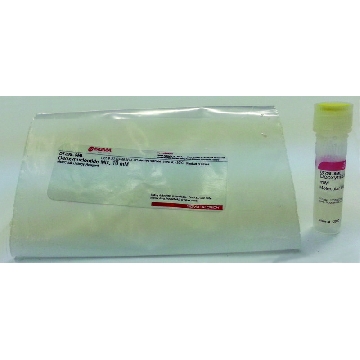
Two supplementary FISH (fluorescence in situ hybridization) probes to the Eubacteria FISH probe (EUB-388, MBD0033), that will cover additional bacterial phyla not included in the coverage of the original probe, e.g. Planctomycetota and Verrucomicrobia . It is recommended to use the probes in the kit either separately, or in addition to the Eubacteria FISH probe (MBD0033) in equimolar amounts, and 20% formamide for hybridization buffer.
Features and Benefits
- Visualize, identify, and isolate bacteria cells
- Observe native bacteria cell populations in diverse microbiome environments
- Specific, sensitive, and robust identification of bacteria cells in mixed microorganism population
- Specific, sensitive, and robust identification even when bacteria are in low abundance in the sample
- FISH can complete PCR-based detection methods by avoiding contaminant bacteria detection
- Provides information on bacteria morphology and allows to study biofilm architecture
- Identify various bacteria in environmental and clinical samples such as formalin-fixed paraffin-embedded (FFPE) samples, blood cultures, saliva and more
- The ability to detect bacteria in its natural habitat is an essential tool for studying host-microbiome interaction
| Quality Segment | 200 |
| packaging | pkg of 1 kit |
| storage condition | protect from light |
| concentration | 20 μM in water |
| shipped in | dry ice |
| storage temp. | -10 to -25°C |
| 长度(mm) | |
| 宽度(mm) | |
| 高度(mm) | |
| 重量(kg) |
-
¥ 2707.32
-
¥ 2528.88
-
¥ 2019.57
-
询价
-
询价
-
询价
-
询价
-
¥ 3442.25
-
¥ 8135.09
-
询价
-
询价
-
询价
-
¥ 3812.28
-

询价
-
¥ 15214.65
-
¥ 2573.97
-
¥ 2666.57
-
¥ 1301.36
-
¥ 2173.94
-
NNALGENE 180透明塑料管,透明,柔软,多用,经济,内径 x 外径x壁厚,1/4 x 1/2 x 1/8,英寸,每箱数量50,50/箱,8000-0080,Thermofisher,赛默飞世尔
询价









 微信小程序
7X24小时在线咨询
微信小程序
7X24小时在线咨询