


- 商品介绍
- 规格参数
- 包装参数
General description
mRNA Guanylyltransferase can be used for the enzymatic addition of a 7-methylguanylate cap (Cap-0, m7 G-ppp-RNA) structure to the 5′ end of RNA molecules. The Cap-0 structure is formed enzymatically from 5′-triphosphorylated RNA (ppp-RNA; from native or in vitro transcriptions, or chemical synthesis) by mRNA Guanylyltransferase. This enzyme catalyzes three sequential reactions: triphosphatase (TPase), guanylyltransferase (GTase), and methyltransferase (MTase), consuming GTP and S-Adenosylmethionine (SAM) in the process. 5′-cap structures of mRNA are key to transcript stability, supporting translation and function, and reducing immunogenicity and degradation to achieve stable protein expression.
Application
Capping of RNA Molecules: mRNA Guanylyltransferase is employed for the enzymatic addition of a 7-methylguanylate cap (Cap-0, m7 G-ppp-RNA) to the 5′ end of RNA molecules. This process is crucial for modifying 5′-triphosphorylated RNA (ppp-RNA) derived from native or in vitro transcriptions, or chemical synthesis.
Mechanistic Studies: The enzyme catalyzes three sequential reactions: triphosphatase (TPase), guanylyltransferase (GTase), and methyltransferase (MTase). These reactions can be studied to understand the mechanisms of capping and the roles of GTP and S-Adenosylmethionine (SAM) in the capping process.
Transcript Stability Investigations: The impact of 5′-cap structures on the stability of mRNA transcripts can be analyzed. By comparing capped and uncapped RNA, insights into the protective roles of the cap in preventing degradation can be obtained.
Translation Efficiency Studies: The addition of Cap-0 is essential for facilitating translation initiation. Experiments can be conducted to assess how the presence of this cap structure influences ribosome binding and overall translation efficiency.
Immunogenicity Assessments: Understanding the immunogenic response of mRNA is important for therapeutic applications. The role of 5′-cap structures in reducing immunogenicity and enhancing stability can be explored through various in vitro and in vivo models.
Features and Benefits
Scalable mRNA Synthesis: Designed for scalable mRNA production, suitable for both small-scale laboratory research and large-scale applications in biotechnology and pharmaceuticals.
Enhanced Stability: The addition of a 7-methylguanylate cap significantly increases the stability of mRNA transcripts, prolonging their lifespan in cellular environments and reducing degradation.
Facilitated Translation Initiation: The Cap-0 structure is critical for efficient translation initiation, promoting ribosome recognition and binding to the mRNA, which enhances protein synthesis.
Reduced Immunogenicity: The presence of a proper capping structure helps to minimize the immune response to mRNA, making it more suitable for therapeutic applications, including vaccines.
Versatile Application: mRNA Guanylyltransferase can be applied to various RNA substrates, allowing for flexibility in experimental design and enabling the study of different RNA species.
Improved Functional Assays: The enzyme enables the production of capped RNA for use in functional assays, enhancing the reliability of experiments that depend on mRNA functionality.
| form | solution |
| packaging | pkg of 250 μg |
| manufacturer/tradename | Roche 10424338001 |
| storage temp. | −20°C |
| 长度(mm) | |
| 宽度(mm) | |
| 高度(mm) | |
| 重量(kg) |
-
¥ 12156.68
-
询价
-

询价
-
¥ 1259.40
-
询价
-
¥ 4173.75
-

询价
-
询价
-
询价
-
¥ 238.17
-

询价
-

询价
-
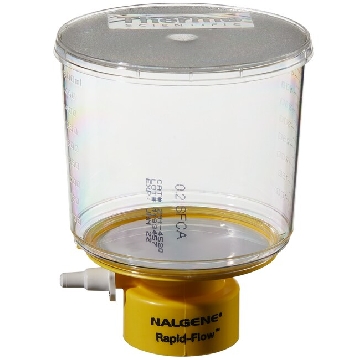 瓶顶过滤器-500ml容量,MF75TM系列,聚苯乙烯外壳,75mmSFCA滤膜,孔径0.2um,适合瓶颈尺寸45mm,12/箱,291-4520,Nalgene,Thermofisher,赛默飞世尔
¥ 2856.42
-
¥ 1653.62
-
询价
-
¥ 1783.21
-
¥ 2452.91
-
¥ 2406.69
-
NALGENE 180透明塑料管,透明,柔软,多用,经济,内径 x 外径x壁厚,1/8 x 1/4 x 1/16,英寸,每箱数量50,50/箱,8000-0020,Thermofisher,赛默飞世尔
询价
-
询价









 微信小程序
7X24小时在线咨询
微信小程序
7X24小时在线咨询