


- 商品介绍
- 规格参数
- 包装参数
General description
Trypsin Agarose is an insoluble enzyme product. It is produced by reacting a conventional "soluble" enzyme (trypsin) with an inert base (agarose). This insoluble conjugate retains the activity of the original enzyme. Trypsin bound to agarose are highly stable and maintain denaturing conditions for longer time than the soluble trypsin.
The trypsin molecule has two domains: one is related to the enzyme active site and the tryptophan residues; the other is related to the 8-anilinonaphthalene-1-sulfonate binding.
Application
Trypsin Agarose has been used for enzymatic hydrolysis of prolamins and gliadin to generate peptides.
A very active and very stable trypsin agarose derivative has been used to optimize the design of the synthesis of a model dipeptide, benzoylarginine leucinamide. Trypsin has also been used in a study to investigate protonation-state determination in proteins using high-resolution X-ray crystallography.
Physical form
Suspension in approx. 10 mM acetic acid, pH 3.2
Other Notes
Insolubilized
One unit will hydrolyze 1.0 μmole of BAEE per min at pH 8.0 at 30 °C (titrimetric assay).
| biological source | bovine pancreas (trypsin) |
| Quality Segment | 200 |
| form | buffered aqueous suspension |
| concentration | ≥15 units/mL (packed gel) |
| extent of labeling | ≥15 units per mL packed gel |
| matrix | cross-linked beaded agarose |
| shipped in | wet ice |
| storage temp. | 2-8°C |
| 长度(mm) | |
| 宽度(mm) | |
| 高度(mm) | |
| 重量(kg) |
-
询价
-
¥ 2528.88
-
¥ 1259.40
-
询价
-
询价
-
询价
-
¥ 6330.00
-
询价
-
询价
-
¥ 1653.62
-
询价
-
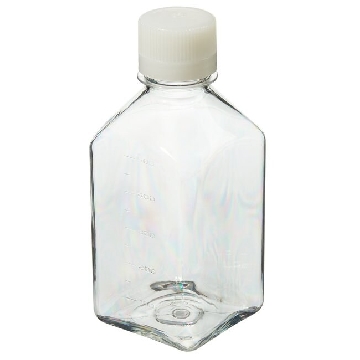 无菌,PETG 方形有刻度培养基瓶,带盖,聚对苯二酸乙二醇酯共聚物,天然高密度聚乙烯盖,500毫升容量,每箱40,40/箱,342020-0500,Nalgene,Thermofisher,赛默飞世尔
¥ 3684.34
-
¥ 2573.97
-
¥ 2617.87
-
¥ 1476.40
-
¥ 3896.11
-
¥ 1351.48
-
¥ 10685.48
-
询价
-
¥ 58184.19









 微信小程序
7X24小时在线咨询
微信小程序
7X24小时在线咨询