





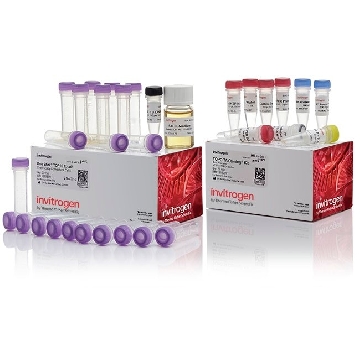
- 商品介绍
- 规格参数
- 包装参数
General description
Fluorescent In Situ Hybridization technique (FISH) is based on the hybridization of fluorescent labeled oligonucleotide probe to a specific complementary DNA or RNA sequence in whole and intact cells. Microbial FISH allows the visualization, identification and isolation of bacteria due to recognition of ribosomal RNA also in unculturable samples. FISH technique can serve as a powerful tool in the microbiome research field by allowing the observation of native microbial populations in diverse microbiome environments, such as samples from human origin (blood and tissue), microbial ecology (solid biofilms, aquatic systems) and plants. It is strongly recommended to include positive and negative controls in FISH assays to ensure specific binding of the probe of interest and appropriate protocol conditions. We offer positive (MBD0032/33) and negative control (MBD0034/35) probes, that accompany the specific probe of interest.
Enterococcus faecium probe specifically recognizes E. faecium cells,. E. faecium, a gram-positive bacteria can cause various complicated infectionsincluding endocarditis, urinary tract infections, prostatitis, intra-abdominalinfection, cellulitis, and wound infection and concurrent bacteremia. Studies have shown that E. faecium is highly resistant to multiple antibiotics and that vancomycin-resistant Enterococcus faecium (VRE) can be asymptomatically carried by healthy people, which can hamper hospitals’ attempts to control the spread of the bacteria. Over the past two decades, Enterococcus faecium has emerged as a leading cause of multidrug-resistant enterococcal infection in the United States. E. faecium has a high antibiotic-resistance with more than half of its pathogenic isolates expressing resistance to vancomycin, ampicillin, and high-levels of aminoglycosides.
Application
Enterococcus faecium FISH probe - Cy3 is suitable to use as a probe for fluorescence in situ hybridization (FISH) to recognize Enterococcus faecium cells in clinical samples.
Features and Benefits
- Visualize, identify, and isolate E. faecium cells.
- Observe native E. faecium cell populations in diverse microbiome environments.
- Specific, sensitive, and robust identification of E. faecium in bacterial mixed population.
- Specific, sensitive, and robust identification even when E. faecium is in low abundance in the sample.
- FISH can complete PCR based detection methods by avoiding contaminant bacteria detection.
- Provides information on E. faecium morphology and allows to study biofilm architecture.
- Identify E. faecium in clinical samples such as tumor and brain tissues (for example in formalin-fixed paraffin-embedded (FFPE) samples), saliva and oral cavity and medical equipment such as dental implants and voice prostheses.
- The ability to detect E. faecium in its natural habitat is an essential tool for studying host-microbiome interaction.
| Quality Segment | 200 |
| technique(s) | FISH: suitable |
| shipped in | dry ice |
| storage temp. | −20°C |
| 长度(mm) | |
| 宽度(mm) | |
| 高度(mm) | |
| 重量(kg) |
-

询价
-

¥ 827.30
-

¥ 2355.14
-
询价
-
询价
-
询价
-
询价
-
¥ 782.57
-

¥ 2757.88
-

¥ 3254.04
-
¥ 1260.99
-
询价
-

询价
-

询价
-
询价
-

询价
-

¥ 2532.00
-

询价
-
¥ 478.46
-

¥ 1212.50









 微信小程序
7X24小时在线咨询