




- 商品介绍
- 规格参数
- 包装参数
General description
Substance-P receptor (UniProt P25103; also known as Neurokinin-1 receptor, NK-1 receptor, NK-1R, SPR, Tachykinin receptor 1) is encoded by the TACR1 (also known as NK1R, TAC1R) gene (Gene ID 6879) in human. NK-1, NK-2 and NK-3 are receptors that mediate the biological activities of tachykinins, including substance P (SP), neurokinin A (NKA), neurokinin B (NKB), ranakinin, kassinin, neuropeptide gamma, and eledoisin, widely distributed in the central and peripheral nervous systems. SP shows the highest affinity toward NK-1R (substance-P receptor) and exerts its biological activities via NK-1R, including addiction, depression, chronic inflammation, and cancer progression. The involvement of NK-1R in acute pancreatitis through mediating neurogenic inflammation has also been reported. Upon stimulation by SP, NK-1R interacts with multiple G proteins, including G s, G q/11, G i/o, G 12, and G 13, generating second messengers and activating downstream effector molecules. After binding NK-1R, SP induces a clathrin-dependent internalization of the receptor-ligand complex, SP is then degraded and the receptor is recycled to the cell surface. NK-1R is a 7-transmembrane (32-54, 65-86, 107-128, 149-169, 195-219, 249-270, 284-308) GPCR, having its N-terminal end (a.a. 1-31) at the extracelluar side and C-terminal end (a.a. 309-407) at the cytoplasmic side. There exists a second alternatively spliced human NK-1R isoform that lacks the C-terminal cytoplasmic domain (a.a. 312-407 missing). The full-length form enhances the growth of cancer cells and stimulates the production of cytokines, which in turn up-regulate the truncated form. The truncated form mediates malignancy and is more abundant in colonic epithelial cells from patients with colitis-associated cancer. In cancer cells, the NK-1 receptor is mainly localized on the plasma membrane and in cytoplasm, and occasionally also in the nucleus.
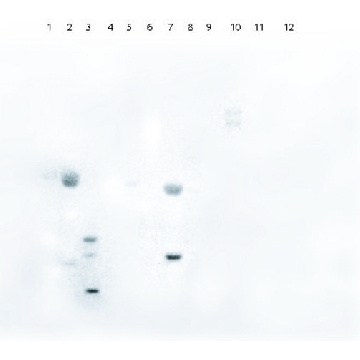
~58 kDa observed. Target band size appears larger than the calculated molecular weights of 46.25/46.32/46.37 kDa (human/mouse/rat) due to glycosylation. Uncharacterized bands may be observed in some lysate(s).
Immunogen
KLH-conjugated linear peptide corresponding to the C-terminal end sequence of human substance P receptor.
Application
Detect Substance P receptor using this rabbit polyclonal Anti-Substance P Receptor Antibody, Cat. No. ABN1369, validated for use in Immunohistochemistry and Western Blotting.
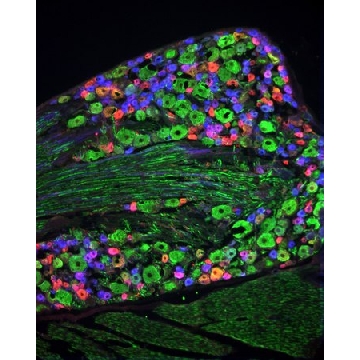
Immunohistochemistry Analysis: A 1:50 dilution from a representative lot detected substance P receptor in human, mouse, and rat brain tissue sections.
Biochem/physiol Actions
This rabbit polyclonal antibody targets substance P receptor C-terminal end sequence. Target region is absent in human spliced isoform 2.
Analysis Note
Evaluated by Western Blotting in rat brain tissue lysate.
Western Blotting Analysis: 0.2 µg/mL of this antibody detected substance P receptor in 10 µg of rat brain tissue lysate.
Other Notes
Concentration: Please refer to lot specific datasheet.
| biological source | rabbit |
| Quality Segment | 100 |
| conjugate | unconjugated |
| antibody form | affinity isolated antibody |
| antibody product type | primary antibodies |
| clone | polyclonal |
| purified by | affinity chromatography |
| species reactivity | rat, human, mouse |
| species reactivity (predicted by homology) | canine (based on 100% sequence homology), rhesus macaque (based on 100% sequence homology) |
| technique(s) | immunohistochemistry: suitable,western blot: suitable |
| NCBI accession no. | NP_001049 |
| UniProt accession no. | P25103 |
| shipped in | ambient |
| target post-translational modification | unmodified |
| Gene Information | human ... TACR1(6869) |
| 长度(mm) | |
| 宽度(mm) | |
| 高度(mm) | |
| 重量(kg) |
-
询价
-
¥ 2707.32
-

¥ 2528.88
-

询价
-
询价
-
询价
-
¥ 2814.26
-

¥ 1563.36
-
询价
-
询价
-
询价
-
询价
-
询价
-

询价
-
询价
-
¥ 6330.00
-

¥ 4390.38
-
¥ 3812.28
-

询价
-
¥ 1476.00









 微信小程序
7X24小时在线咨询
微信小程序
7X24小时在线咨询