

- 商品介绍
- 规格参数
- 包装参数
General description
Poly(ADP-ribosyl)ation is an immediate DNA-damage-dependent post-translational modification of histones and other nuclear proteins that contributes to the survival of injured proliferating cells. Poly(ADP-ribose) polymerases (PARPs) now constitute a large family of 18 proteins, encoded by different genes and displaying a conserved catalytic domain in which PARP-1 (113 kDa), the founding member, and PARP-2 (62 kDa) are so far the sole enzymes whose catalytic activity has been shown to be immediately stimulated by DNA strand breaks. A large repertoire of sequences encoding novel PARPs now extends considerably the field of poly(ADP-ribosyl)ation reactions to various aspects of the cell biology including cell proliferation and cell death. Some of these new members interact with each other, share common partners and common subcellular localizations suggesting possible fine tuning in the regulation of this post-translational modification of proteins.
Immunogen
PARP16 (NP_803411, 221-258)
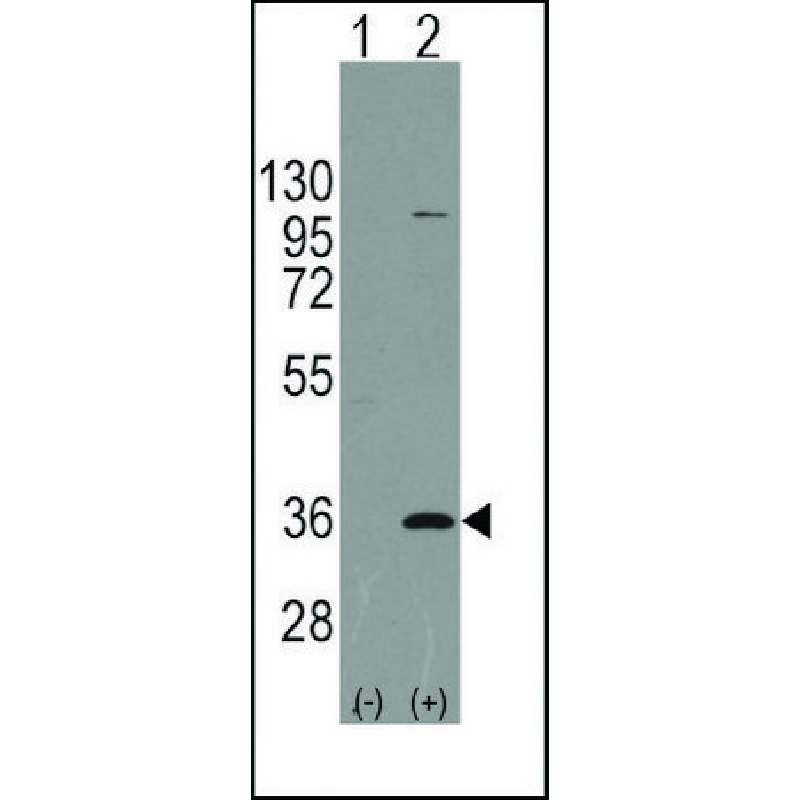
This antibody is generated from rabbits immunized with a KLH-conjugated synthetic peptide selected from the C-terminal region of mouse PARP16.
Physical form
Purified polyclonal antibody supplied in PBS with 0.09% (W/V) sodium azide.
| biological source | rabbit |
| Quality Level | 100 |
| conjugate | unconjugated |
| antibody form | saturated ammonium sulfate (SAS) precipitated |
| antibody product type | primary antibodies |
| clone | polyclonal |
| form | buffered aqueous solution |
| species reactivity | mouse, human |
| technique(s) | indirect ELISA: 1:1000,western blot: 1:100-1:500 |
| NCBI accession no. | NP_803411 |
| UniProt accession no. | Q7TMM8 |
| shipped in | dry ice |
| storage temp. | −20°C |
| target post-translational modification | unmodified |
| Gene Information | human ... PARP16(214424) |
| 长度(mm) | |
| 宽度(mm) | |
| 高度(mm) | |
| 重量(kg) |
-
询价
-
询价
-
询价
-
询价
-
询价
-
询价
-
询价
-
¥ 1153.44
-
¥ 1756.15
-
¥ 6085.86
-
¥ 4110.85
-

¥ 3593.05
-
¥ 656.88
-
¥ 462.77
-
¥ 981.17
-
¥ 2396.11
-
询价
-
¥ 66743.99
-
¥ 70526.15
-
¥ 165230.53









 微信小程序
7X24小时在线咨询